


 Сообщения


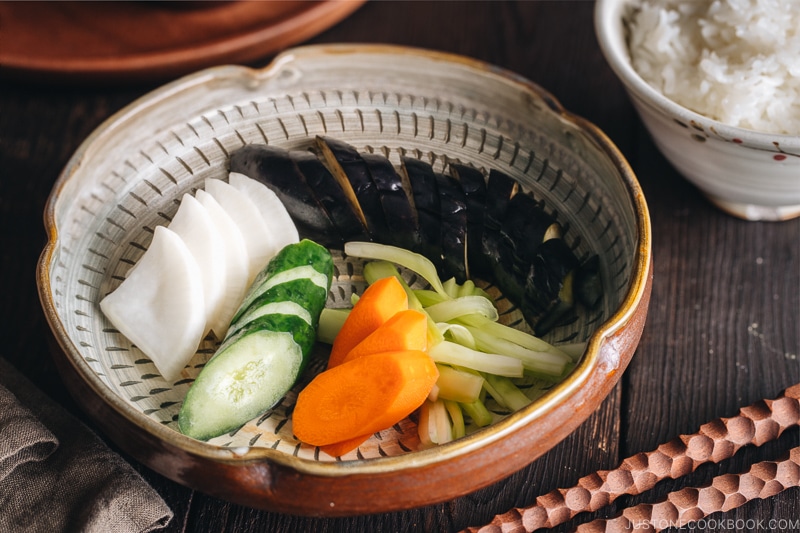
Shiozuke is the simplest Japanese pickle - Tsukemono. All you need is salt, water, and fresh seasonal vegetables. Try this pickle today to serve with your Japanese steamed rice and miso soup!
TSUKEMONO – SHIOZUKE (SALT PICKLING)
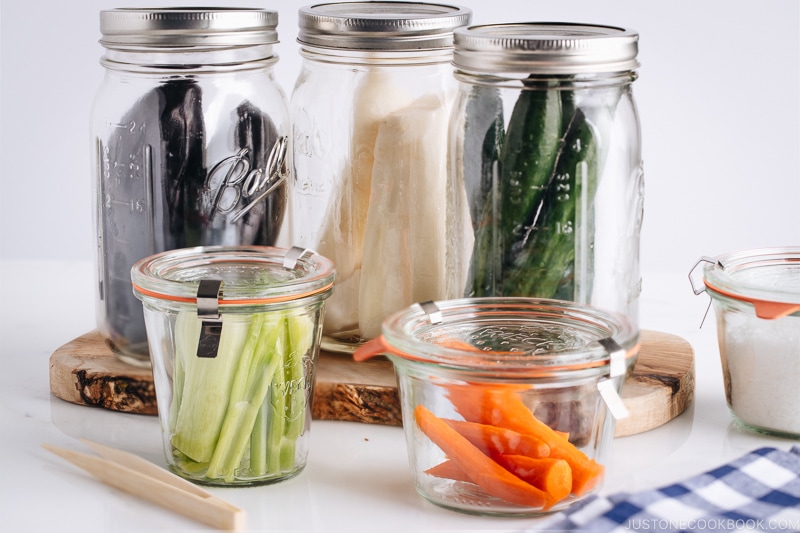
INGREDIENTS
Vegetables to Pickle
- 3 Japanese/Chinese eggplant (Use Lucky Iron Fish to retain the color: See Notes)
- 5 Persian/Japanese cucumbers
- 1 daikon radish
- 5 celeries
- 2 carrots
Brine
- 1000 ml water
- 20-100 g sea salt (for 2 to 10% brine)
INSTRUCTIONS
- Gather all the ingredients. Also, prepare a clean container with a lid for each vegetable. You can also put all vegetables (except for eggplants) in one big container.
Measure the Weight (Important!)
- Decide the amount of salt you want to use and weigh the salt (Please read the blog post). This recipe is 5% brine (50 grams of sea salt in 1000 grams/ml of water) and made double batch (100 grams of sea salt in 2000 grams/ml of water) as I used a lot of vegetables to demonstrate.
- Weigh each vegetable you’re pickling and write down the number. At the next step, you'll need to find out the weight of the heavy objects to put on the vegetables.
- Figure out which heavy object to use. Make sure to include the plate that goes under the heavy object. The total weight (object + plate) needs to be 1.5 to 2 times of the total vegetable weight. You can use several plates, pie weights in a plastic bag, etc.
Prepare the Brine
- Put the measured water and sea salt in the pot and let the salt dissolved completely over medium heat. You do not need to let it boil. You can turn off the heat once it’s warm and salt is completely dissolved. Let cool. Tip: In winter, it’s fast if you put the pot outside (leaving the lid slightly ajar). In summer, make the brine the previous day.
Cut the Vegetable (If Necessary)
- Eggplants: Cut off the end of eggplants. When you are making Asazuke (quick pickles), cut the eggplant in half or cut a slit vertically about half the length in the eggplant to let the salt brine absorb. Otherwise, you don’t need to cut the eggplants. Place them in the container. Tip: To prevent the beautiful eggplants from discoloring, I used 'Lucky Iron Fish' - a cooking tool that retains colors and adds iron to foods. It is optional but worth investing especially if you need more iron in your diet. (See Notes).
- Cucumbers: You don’t need to cut. Place them in the container.
- Daikon radish: Peel and cut in half or quarters vertically depending on its size. Place them in the container.
- Celeries: Remove the leafy parts and cut into the length that would fit in the container. Place them in the container.
- Carrots: Peel and cut into the length that would fit in the container. Place them in the container.
To Pickle
- Eggplants: Pour the brine until they are submerged.
- Place a plate on top of the vegetable, and then put a weight on the plate. You can use plates and pie weights. Make sure the vegetables are completely submerged. Place a lid on and close tightly.
Pickling Time
- Keep the tsukemono at room temperature for best pickling. For my 5% brine, the best pickling time 8 hours. Tip: Pickling time varies depending on vegetables.
To Take Out and Serve
- Remove the eggplants and Lucky Iron Fish from the brine and transfer to a clean airtight container or resealable plastic bag.
- Remove other vegetables from the brine and transfer to a clean airtight container.
To Serve
- Cut the tsukemono into slices when you are ready to serve.
- Serve on a plate and enjoy!
To Store
- With 5% brine, you can keep the shiozuke in the refrigerator for up to 4 days. Do not cut the tsukemono into slices until you are ready to serve.
Reuse of the Leftover Brine
- You can reuse the brine for up to a month. You may need to add more salt as the brine will become less salty. Also, it's good to boil the brine to keep it germ-free.
Комментариев нет:
Отправить комментарий