


 Сообщения


Tempeh is a fermented bean cake, patty, or block. It’s made by partially cooking
the beans and then fermenting them with a mold called Rhizopus oligosporus. Soybeans are the most typical legume found in tempeh, but other kinds of beans can be used to make it as well. Tempeh makers sometimes also include grains like rice, barley, and millet in their cakes. And some even make Hempeh, which, not surprisingly, features hemp seeds.Because of the beans that are typically its centerpiece, tempeh is a high protein food, and can act as a plant-based alternative to meat. Depending on how you prepare it, tempeh can have a “meaty” texture, as it’s naturally chewier and denser than tofu, or it can take on a crispy texture like bacon.
Tempeh probably originated in Java (Indonesia) several centuries ago (the earliest known written reference to “têmpê” dates back to 1815, but many historians believe it was invented long before then).
Why Is Tempeh Good for You?

Tempeh scores remarkably high on the “awesomely-good-for-you” chart. Why? For one thing, it delivers a whopping 33 grams of plant-based protein per cup. And it’s naturally low in sodium, a good source of complex carbohydrates, and an excellent source of fiber. Plus, it combines the benefits of two of the healthiest foods on the planet: soy and fermented foods.
We know this thanks to Blue Zone research, which examines the diets and lifestyles of the longest-lived (and healthiest) peoples on earth. In one Blue Zone, Okinawa, soybeans are a staple food. And fermented foods feature prominently in many Blue Zone dishes, including sourdough bread, tofu, wine, and pickled vegetables.
Fermentation appears to have many health benefits. These include the ability to fight disease, strengthen bones, support gut health and immunity, and even help with weight management. And legumes, including soybeans, are high in not only protein, but also B vitamins, and tons of minerals, such as: calcium, iron, magnesium, phosphorus, potassium, copper, and manganese — minerals that fermentation may help to make more bioavailable.
How to Prepare & Use Tempeh
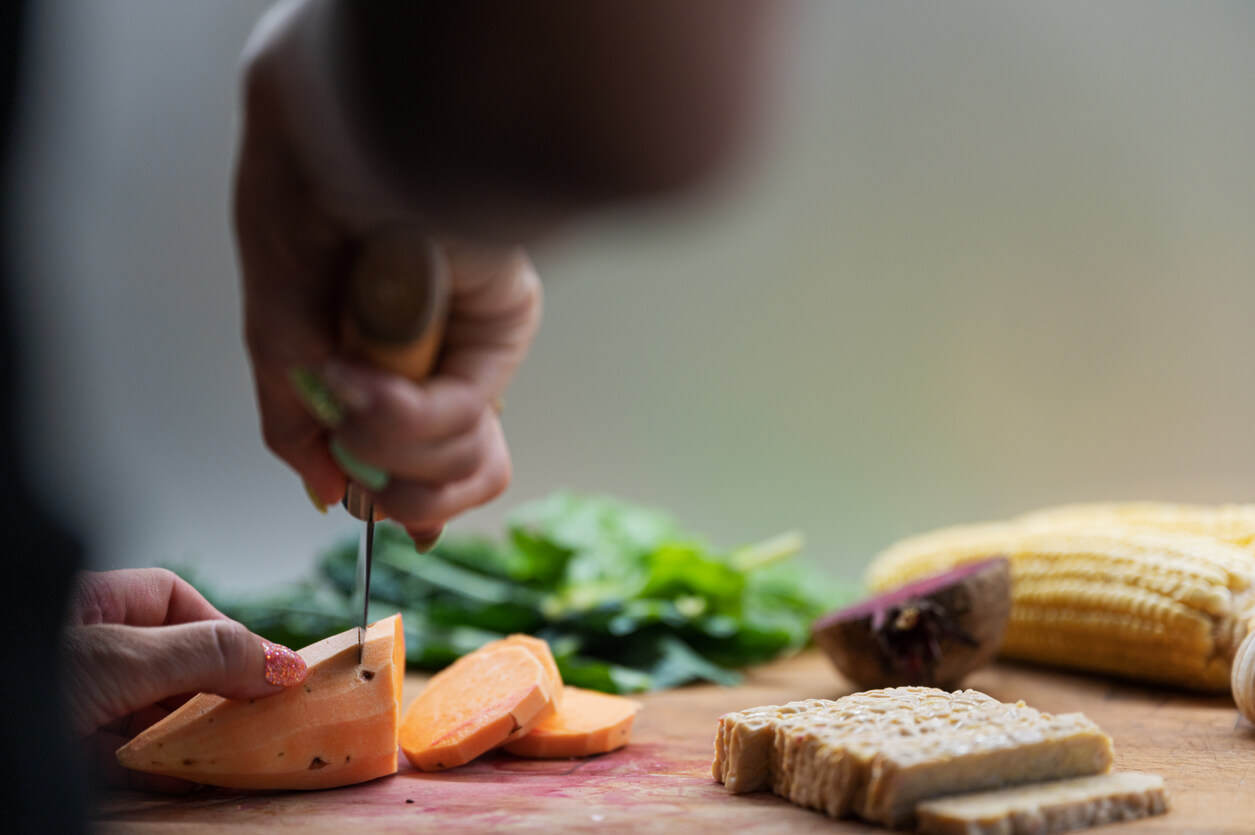
Tempeh is typically sliced, cut into cubes, or crumbled before cooking and using it in a recipe. When you slice tempeh, you get to choose the thickness, depending on what you’re making. For tempeh bacon, go thin. For recipes that mimic chicken or beef strips, or that involve stirring, go thicker, so the tempeh doesn’t fall apart.
You can cook tempeh in a variety of ways, including baking it in an oven, steaming it in a pot or steamer (you can do this as a preliminary step to eliminate that bitter taste some people find less than delicious), pan-fried on the stovetop, grilled, or fried in an air fryer.
Like tofu, tempeh is mild (some would say fairly flavorless) and will take on whatever flavors it’s seasoned or marinated in. But since tempeh is denser than tofu, it absorbs flavors less readily. You can compensate by pre-steaming or boiling it for 15 minutes (this method helps it to absorb flavors more readily), marinating it longer, or cutting it into smaller pieces. Use BBQ sauce, Buffalo sauce, a soy sauce-based marinade, or any other seasoning that strikes your fancy.
You can also use tempeh as a vegan alternative to bacon. Add spices and a marinade to impart that sweet, smoky, salty flavor, and slice it thin for optimal crispiness.
Tempeh bacon can replace oily and highly processed commercial croutons to add flavor and texture to your favorite salads. You can slice it, or crumble it into fake bacon bits. For that matter, marinated and baked or air-fried tempeh makes an awesome crispy snack all by itself.
You can also add cooked tempeh to salads, power bowls and grain bowls, stir-fries, vegan chili (crumbled, it makes a great ground meat substitute), and pasta dishes that traditionally call for meat.
Tempeh is a natural filling for sandwiches, too, and can work in both its crunchy and chewy incarnations. And when you’re feeling fancy and artistic, work some cubed or sliced tempeh into your next plant-based charcuterie board.
How to Make Tempeh
If you can get your hands on some tempeh starter culture, which comes in a plastic baggy and looks like white powder, you can make your own tempeh.
Why would you want to? First off, it’s fun — and if you have kids around, it can even make a good and wholesome science experiment. Second, making kitchen staples is really empowering, as it gives you some degree of independence from the industrial food system. And third, homemade tempeh can taste better than commercially available varieties since it’s fresher, and you can add other beans and grains according to your preferences.
You basically need just three ingredients to make tempeh: dried soybeans, vinegar, and tempeh starter culture. In terms of equipment, you’ll need a sieve, “meat” thermometer, (optional) pressure cooker, and either plastic bags, or stainless steel trays with the tops of the trays covered with perforated aluminum foil or parchment paper.
Комментариев нет:
Отправить комментарий