


 Сообщения


Watermelon is a refreshing fruit that humans have loved for thousands of years.
In modern times, it’s become, in many places, an iconic symbol of summer. There are many types of watermelon out there — both seeded and seedless — and you can eat them in a variety of ways, on their own, or as part of another dish. So is watermelon healthy? Yes, it is! Along with their high water content, watermelons offer a lot of health benefits when enjoyed in moderation and as part of a balanced diet.Wild About Watermelon
Watermelon is one of the most beloved fruits pretty much everywhere in the world. They have the greatest world production of any tropical gourd, exceeding 63 million tonnes, according to the FAO, with China being the largest producer of watermelons, harvesting over 38 million tonnes annually.
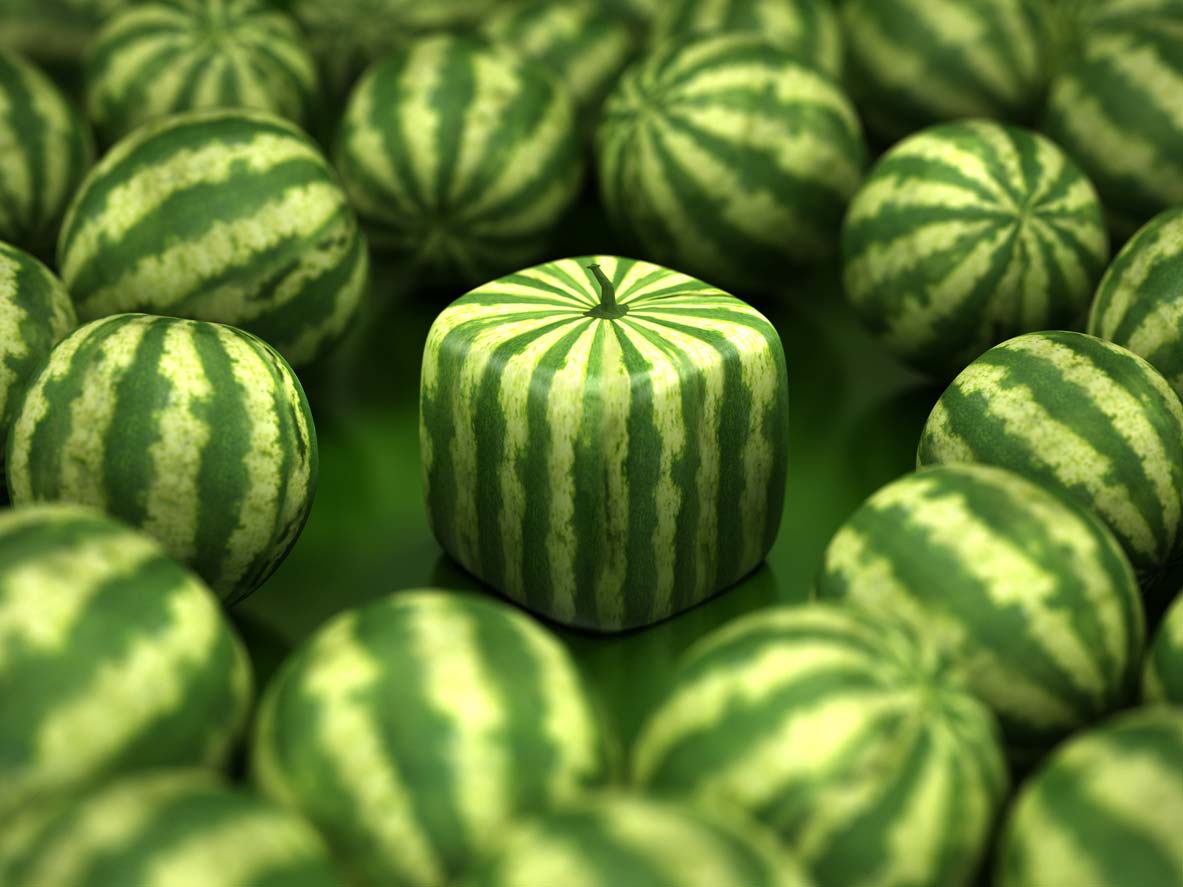
And if you needed any more proof that Americans aren’t unique in their affection for the giant and beautiful watermelons, you should know that in Japan, you can buy a cube-shaped luxury watermelon — grown in a square box — at a high-end department store for several hundred dollars. Popular gifts, they are solely for display and harvested before ripening. (Which made me a little sad; imagine how much more efficiently we could load our fridges if our favorite produce were all cubic or rectangular. Plus, they wouldn’t roll around, which would make them easier to cut. But I digress.)
In the United States, you’re more likely to find watermelons in their natural oblong or round forms for a lot less money. Which is a good thing because you’re probably going to eat yours and want more.
The sweet flavor and distinct juiciness of watermelons make them popular fruits. But are watermelons too sweet to have health benefits? I mean, all that sugar! Plus, as the name says, they’re mostly water. Does that mean they lack nutrients?
So, what’s the truth about watermelon? Is watermelon healthy, or is it just a large sack of sugar water in a rind? Are there any downsides to eating it? How else can you prepare the fruit besides just slicing it? And where do they come from?
History of Watermelons
While watermelons are sometimes thought of as the “all-American” summer fruit (at least, by Americans), they’re actually native to Africa. Archaeological remains of watermelon seeds have been discovered in northeastern Africa, dating from approximately 5,000 years ago.
The oldest archaeological finds of dessert watermelons (yes, that’s ‘dessert,’ as in the sweet ending of a meal, not ‘desert’ that is commonly associated with a lack of water) are from Egypt and Sudan. In a tomb dating to at least 4,000 years ago, scientists found an image of a large, striped, oblong fruit on a tray, further suggesting that the enjoyment of watermelons dates back thousands of years. Sadly, there were no artistic renderings of seed-spitting contests.
The oldest references to watermelons being sweet are in codices of Jewish laws from Israel dating to the time of the Roman Empire. In fact, the Greek word pepon, Latin pepo, and Hebrew avattiah were all used to describe large, wet fruits with a thick rind, a description that perfectly matches our suspect, the watermelon.
If you close your eyes and think of watermelon, you’ll probably come up with the classic green striped oblong, or the slice of red with black seeds and a white/green rind. That’s the classic dessert watermelon. But there are also two additional species of the plant. These are the citron (mainly used for preserves and pickles) and the egusi (which is popular in West Africa, and grown for its seeds). As for the more common types of watermelons, there are a lot more than you probably realize.
Types of Watermelon
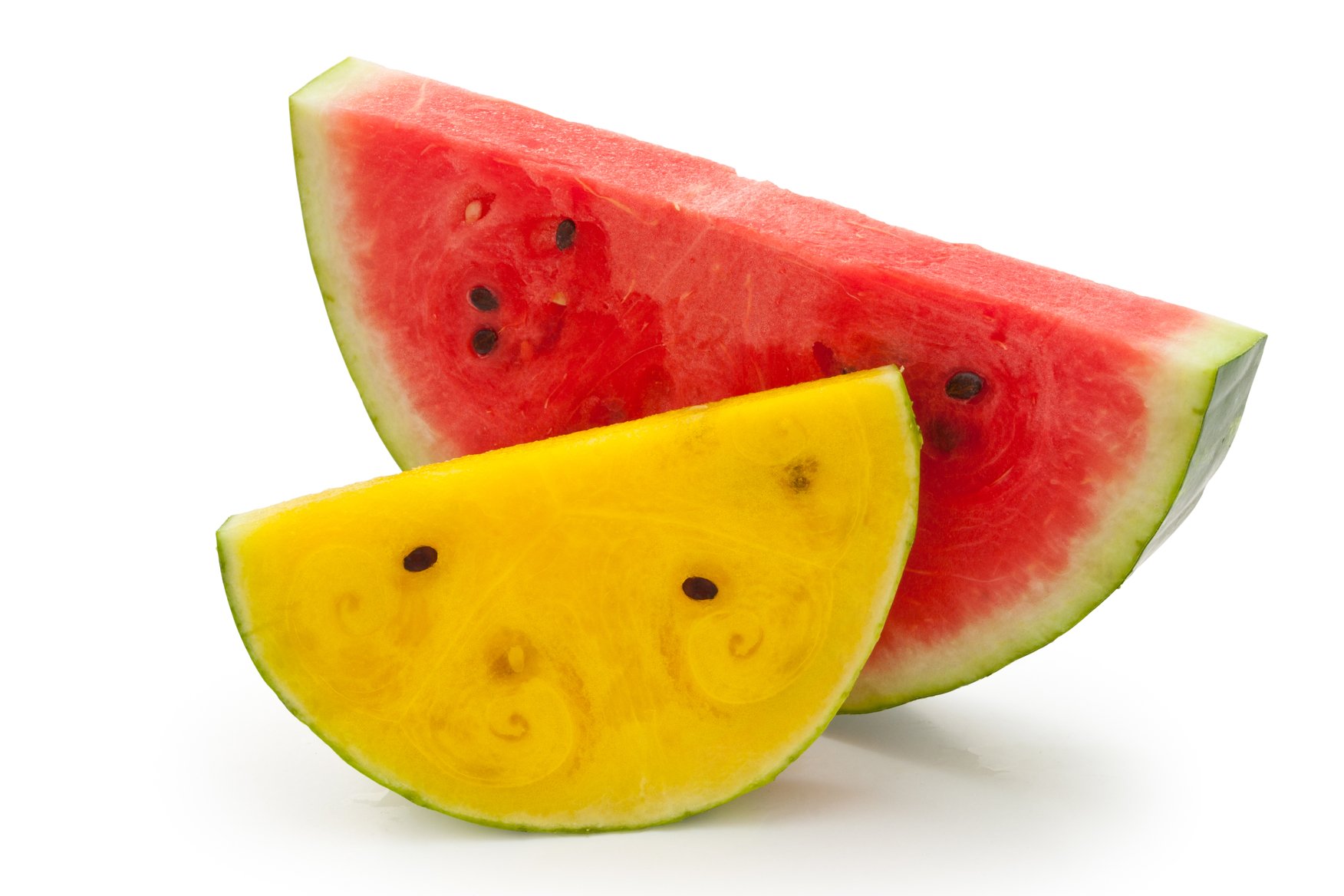
Watermelon is a beautiful fruit as is, but its diversity is truly stunning. While many watermelon varieties can look similar on the outside, their flesh can come in a rainbow of colors, including red, pink, orange, yellow, or even white. Cutting into a watermelon can become its very own “species reveal” party, without the explosions.
Watermelon rinds, on the other hand, are typically green, but don’t always have stripes. Solid green rinds or speckled rinds, as is the case with the Moon & Star variety, are also possible. All varieties come in round or oblong shapes (when they’re not crammed into growing boxes for aesthetics).
The three most popular types of watermelon enjoyed in the US are :
1. Icebox
This is a smaller type of watermelon, which you can usually store in your refrigerator whole. It weighs anywhere from 5-15 pounds. Some popular varieties of icebox watermelon include Sugar Baby, Cal Sweet Bush, and Garden Baby.
2. Picnic
Weighing between 15-50 pounds, the picnic watermelon is very large and is best cut before storing in your fridge, unless your fridge interior is the size of a walk-in closet. Some popular varieties of picnic watermelon include Black Diamond, Crimson Sweet, and Dixie Sweet.
3. Seedless
Usually similar in size to picnic watermelons, seedless types are the majority of watermelons you’ll find in grocery stores. Seedless watermelons came about around 50 years ago. And while they don’t contain mature black seeds, they may contain some immature and edible white seeds.
While there’s a common misconception that seedless watermelons are genetically modified, this isn’t the case. They’re actually a sterile hybrid created by cross-pollinating male pollen for watermelon with a female watermelon flower. In this sense, seedless watermelons are sort of the mule of watermelons, made similarly to crossing a horse and donkey. Popular varieties include King of Hearts, Millionaire, and Crimson.
Watermelon Nutrition

Figuring out if watermelon is healthy or not starts with examining its nutritional content. And nutritionally, watermelons contain lots of good-for-you compounds.
As their name suggests, watermelons have a high water content, which helps keep you hydrated. They’re also high in vitamins A and C, potassium, and carotenoids. In particular, watermelons are high in the antioxidant-rich carotenoid lycopene, which gives the flesh its pinkish-red color. (As a result, red watermelons are naturally higher in lycopene than yellow or pink ones.)
Watermelons are also high in natural sugars (about 9.4 grams of sugar per cup), so they’re high on the glycemic index. But because they’re so high in water, they still turn out to be low on the glycemic load scale. This means that despite their sweetness, they likely won’t spike your blood sugar when you eat them.
Health Benefits of Watermelon

The watermelon is mighty in its size and shape, but also in its potential health benefits. Research has found watermelon is a functional food because its flesh, seeds, sprouts, and leaves are full of compounds that may offer protective properties to those who eat them.
Some of the top health benefits of watermelon include:
1. It may help you lose weight.
Watermelon is rich in water and fiber, which help fill you up when you eat it. These nutrients can reduce appetite and potentially prevent overeating that would otherwise contribute to unwanted weight gain.
In one study among 33 overweight or obese adults, researchers found that eating two cups of watermelon daily for four weeks led to a significant reduction in body weight, body mass index, and waist-to-hip ratio. This was compared to the effects of another group who consumed isocaloric, (meaning, the same number of calories as the watermelon) low-fat cookies daily for four weeks instead — which led to an increase in body fat.
2. It may protect against heart disease.
Watermelon is high in compounds that may reduce inflammation, offer antioxidant effects, and help improve lipid profiles. It contains the amino acid L-citrulline, which is the precursor of L-arginine, another essential amino acid used for protein synthesis. It’s also a rich source of the antioxidant-rich carotenoid lycopene. Both of these compounds may play roles in protecting your cardiovascular system.
Additionally, eating watermelon has been observed to help increase the synthesis of nitric oxide, a colorless gas that dilates your blood vessels and helps prevent blockages.
3. It may have anticancer properties.
Eating plenty of naturally antioxidant-rich foods is one way that you can help your body better defend itself against cancer.
The L-citrulline content and nitric oxide boosting effects of watermelon may be the reason that watermelon decreases cancer cell proliferation in some animal studies. Watermelon may also regulate the expression of DNA repair enzymes to combat cancer in mice.
4. It may be used to help treat ulcerative colitis.
Ulcerative colitis (UC) is an inflammatory bowel disease characterized by widespread inflammation throughout the digestive tract. It’s a risk factor for colorectal cancer, rheumatoid arthritis, ankylosing spondylitis, and psoriasis.
Some research has found that watermelon can help with UC by increasing antioxidant activity and alleviating inflammation.
5. It may be good for your skin.
The antioxidants in watermelon help protect your skin from sun damage and fight oxidative stress. Antioxidants, like the lycopene in watermelon, may help minimize wrinkles and slow other aging effects related to UV damage.
6. It may help support your athletic performance.
Watermelon is a natural source of L-citrulline, which may increase L-arginine bioavailability and nitric oxide production that can aid in exercise performance. There are several studies that have found success in L-citrulline supplementation for improving exercise performance and recovery.
One study among 22 athletically trained males found that oral L-citrulline supplementation for seven days significantly increased plasma L-arginine levels. It also reduced completion time of a four-kilometer bicycle race by 1.5%, compared to the placebo group. The athletes also reported significantly reduced muscle fatigue following exercise. Of course, cyclists will not race faster if they have to carry the watermelon with them while they ride.
Комментариев нет:
Отправить комментарий